What is Radiant Heating/Cooling?
Heat transfer occurs through three primary mechanisms. Conduction happens when objects in direct contact exchange thermal energy — like touching a hot coffee mug. Convection involves air movement transferring heat, whether forced through conventional HVAC systems or occurring naturally through density differences. Radiant transfer differs fundamentally because it doesn't depend on air itself; instead, heat is transmitted through electromagnetic waves, enabling energy transfer without requiring air temperature changes.
How do Radiant Systems Work?
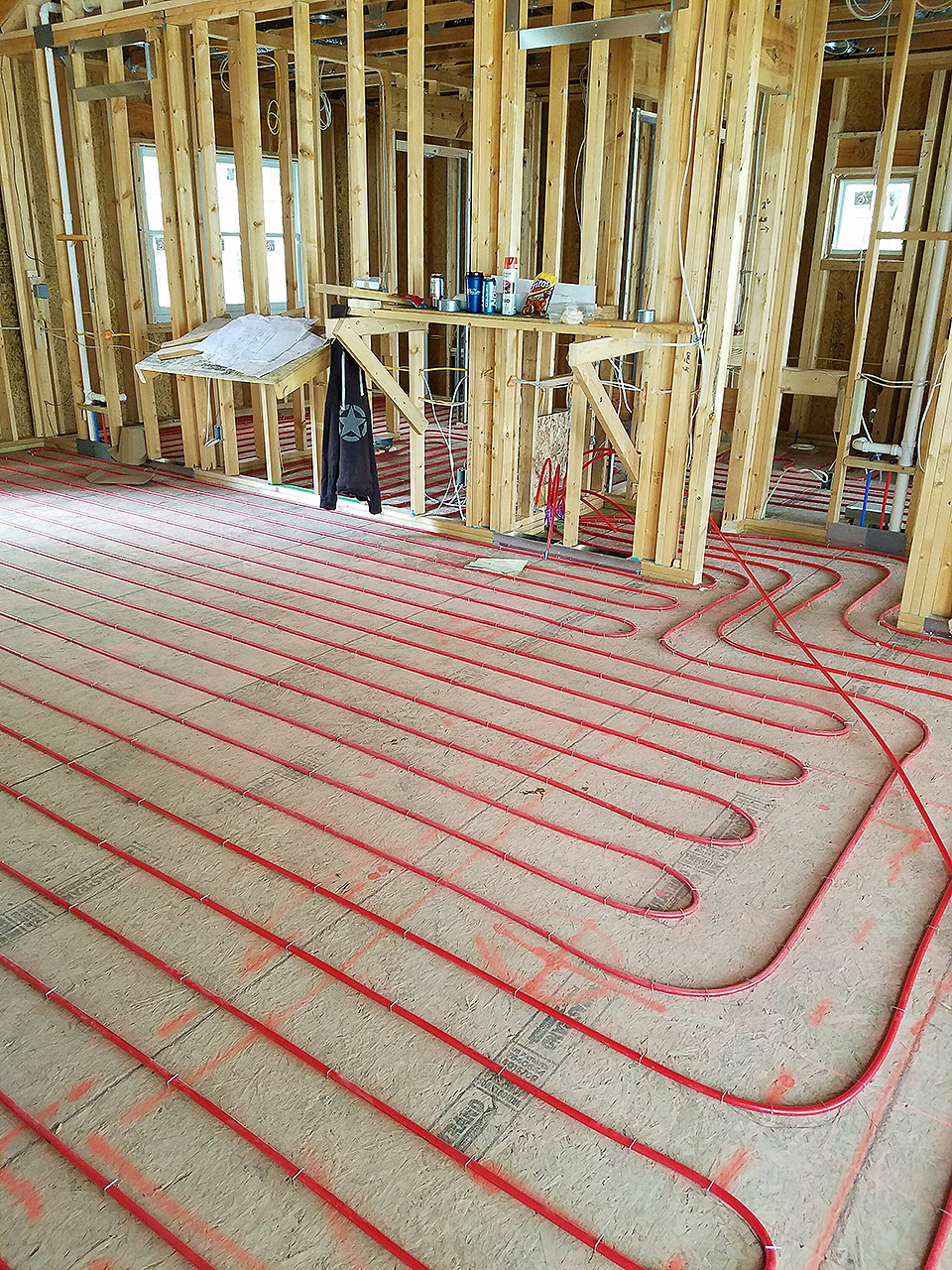
The system leverages thermal mass — concrete slabs or wood floors — to regulate surface temperature. By maintaining a temperature difference between surfaces and spaces, heat transfer flows in the desired direction. Water circulates through embedded tubing networks in concrete slabs. Controlling water temperature manages slab temperature; warmer slabs than spaces create radiation effects toward the space, while chilled water absorbs ambient heat, producing cooler environments.
“Radiant systems typically outperform conventional alternatives in efficiency.
”
How is Radiant Heating/Cooling Better Than Other Options?
Radiant systems typically outperform conventional alternatives in efficiency. Research from Lawrence Berkeley National Labs demonstrates a radiant system can be between 17% to 43% more energy efficient than commercial airside systems, with some studies showing over 50% improvements. The California Energy Commission noted that over 50% of the net-zero buildings installed in California incorporated some sort of radiant heating or cooling strategy. Rather than relying on fan motors powering air delivery, these systems use pumps circulating water, leveraging water's superior heat transfer capacity for more effective BTU movement and comfortable spaces.
Are There Health Benefits of Radiant Heating/Cooling?
Multiple health advantages emerge from radiant systems, primarily through creating comfortable environments without relying heavily on ductwork-delivered air. This approach mitigates indoor air quality concerns. One strategy involves dedicated outdoor air systems where radiant heating and cooling handles thermal control while delivered air provides only ventilation, exhausted rather than recirculated. This configuration proves especially valuable in schools where exhausting contaminated air rather than recirculating it promotes healthier student environments.
Axiom Engineering Group
Axiom Engineering Group
Published