As summer temperatures soar, staying cool becomes a top priority. Whether at home or work, maintaining an efficient cooling system is crucial for enjoying the summer heat without discomfort. Ready to enjoy everything these hot months have to offer with an eco-friendly and cost-conscious cooling system? That's where geothermal cooling comes into play.
At Axiom Engineering Group, we're passionate about providing our clients with reliable, sustainable, and cost-effective solutions to maintain the perfect temperature all year round. Geothermal cooling is one of our top recommendations for clients looking to harness the power of the earth to manage temperatures in their homes or businesses efficiently.
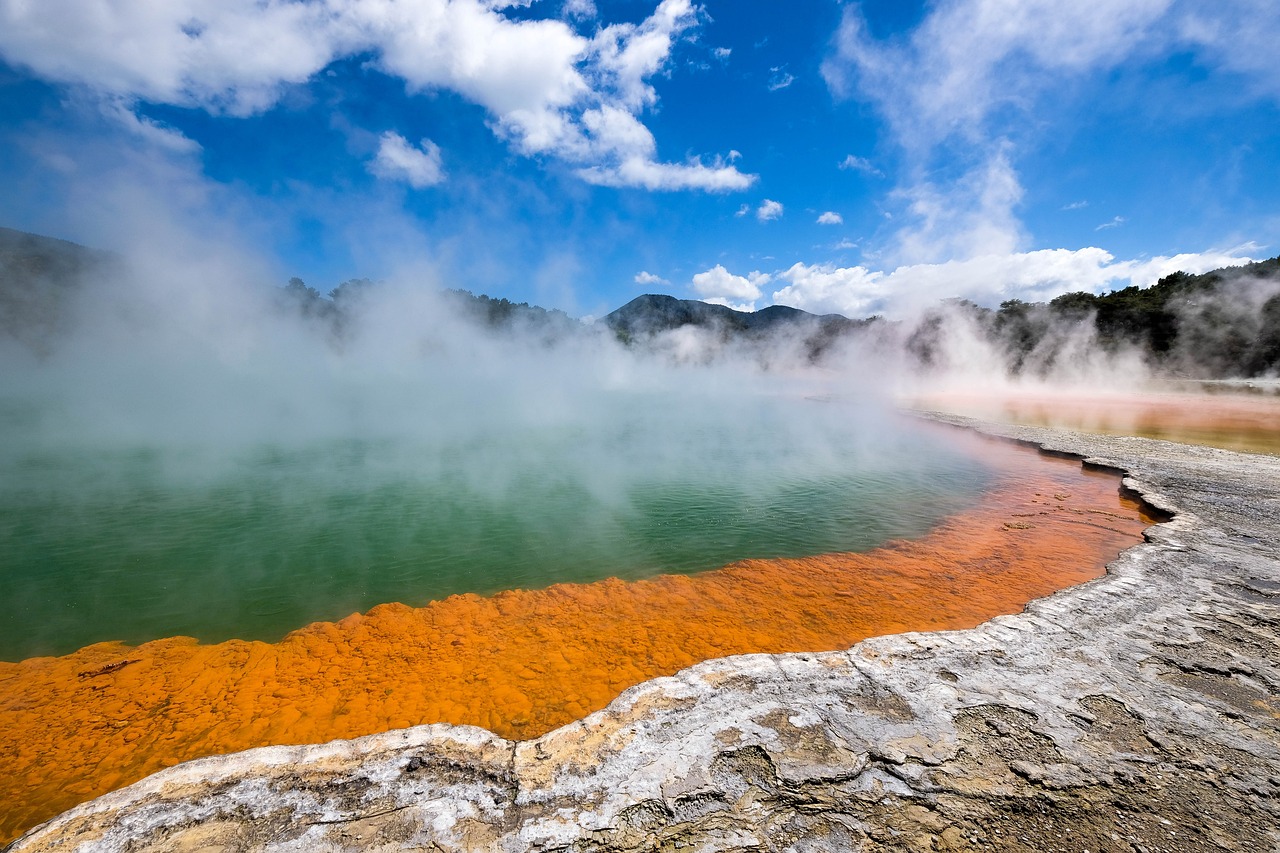
Derived from the Greek "geo" and "therme", the term geothermal translates to "earth heat," referencing continuous heat production from Earth's interior. Beyond visible geothermal phenomena like hot springs and geysers, underground thermal resources exist depending on location. Primary applications include electricity generation and using underground temperatures for heating and cooling above ground.
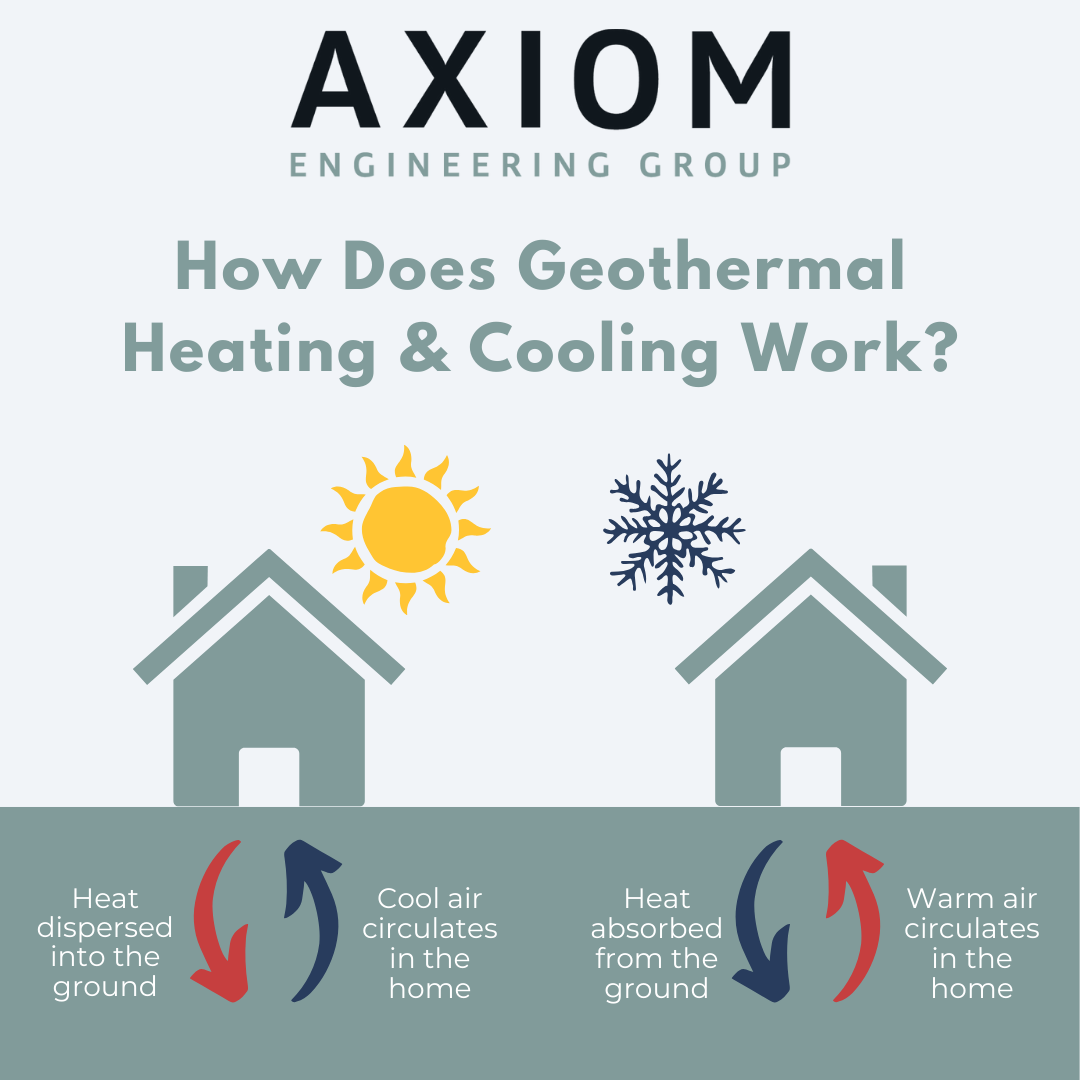
Geothermal cooling systems work by transferring heat from your building into the ground, utilizing the earth's consistent underground temperatures. This process not only cools your space effectively, but also provides a flexible and reliable system for year-round climate control. Unlike traditional air conditioning systems that depend on external temperatures and energy sources, geothermal cooling takes advantage of the Earth's natural temperature stability — this means lower energy costs and less environmental impact.
In a geothermal system, a loop of pipes buried in the ground acts as a heat exchanger, transferring temperature between the earth and the building. With a geothermal system, the heat from inside the building is absorbed and transferred into the underground loop without the noise and delay of a typical air conditioning unit. The cooler earth absorbs the heat, and the geothermal heat pump uses the cold temperatures found underground to create cool, dehumidified air that is then transferred back into the building.
A ground loop is the heart of a geothermal system and is crucial to the efficiency of geothermal cooling. There are two main types of ground loops: In a closed-loop system, the same liquid continuously circulates through the buried pipes, exchanging heat with the ground. In contrast, open-loop systems draw water from a nearby source, such as a well or pond, and return it after heat exchange.
“, the term geothermal translates to
”
One of the most compelling reasons to choose geothermal cooling is the reduced environmental impact and carbon footprint. Traditional heating and cooling systems contribute significantly to carbon emissions — residential heating and cooling alone account for over 10% of the United States' carbon emissions and 40% of its annual energy usage. In contrast, geothermal systems produce zero carbon emissions during operation, making them a greener choice for temperature regulation.
Reports from the U.S. Department of Energy and the International Ground Source Heat Pump Association indicate that switching to geothermal from a traditional system can reduce up to 75% of a home's carbon emissions.
Homeowners are eligible for a 30% tax credit under the Inflation Reduction Act for ENERGY STAR-rated geothermal heat pumps that are in service by Jan. 1, 2033.
Beyond sustainability efforts and incentive programs, geothermal cooling also offers numerous benefits once the system is installed: efficiency, reliability, and cost savings. Geothermal systems provide consistent operation and stable costs, so users are never without comfortable temperatures or blindsided by inflated costs and recurring maintenance.
Studies from the DOE and United States Environmental Protection Agency report average energy cost savings of up to 50%. Geothermal systems typically require significantly less maintenance and upkeep than traditional heating and cooling systems. The DOE reports that the underground elements typically have a life expectancy of 25-50 years.
At Axiom Engineering Group, we specialize in designing geothermal systems that meet the unique needs of our clients, whether it's for new constructions or retrofitting existing buildings. Learn more about geothermal systems with Axiom Engineering Group today! Give us a call at (406) 542-2849 or email our team at connect@aeg.design.
Shannon Frizzell
Axiom Engineering Group
Published